Unveiling the Impact of Major Events on the Future of Steel Construction in Canada: A Cost-Efficiency, Assembly, and Sustainability Study
Ever wondered how the convergence of major events and long weekends, such as Ottawa’s second Ironman Triathlon and Colonel By Day, can affect the construction industry? As urban and metropolitan cities continue to grow in both stature and complexity, the importance of streamlining construction processes—particularly in relation to steel buildings—cannot be overstated.
Within the ambit of a seemingly chaotic mixture of road closures, bustling activities, and public holidays, smart construction developers see an invitation to reflect, innovate, and conquer new paradigms. In British Columbia, for instance, the median price of homes has surged past an unprecedented CAD 1 Million mark, leading us to ponder: can cost-effective and fast-paced construction processes be the key to a more resilient real estate market?
How can Steel Construction Champion Cost-Efficiency Amidst Rising Property Values?
In the high-stakes chess match that is the construction industry, steel plays a key role as a queen—as versatile as it is invaluable. Steel construction offers robust cost-efficiency, especially in the face of soaring real estate prices.
Several factors converge to make steel a cost-effective choice. Firstly, precision-engineered steel structures eliminate the risk of unpredicted overages, ensuring projects stay within budget. Secondly, steel’s durability and low maintenance requirements all but guarantee substantial savings over the course of a building’s lifecycle.
Can Accelerated Steel Assembly Processes Keep Pace with Demanding Schedules?
Ah, common construction delays, the forever thorn in the side of developers. Traditional construction methods often fall prey to delays due to weather conditions, logistical issues, and labour strikes. However, the rapid assembly capability of steel has emerged as a game-changer.
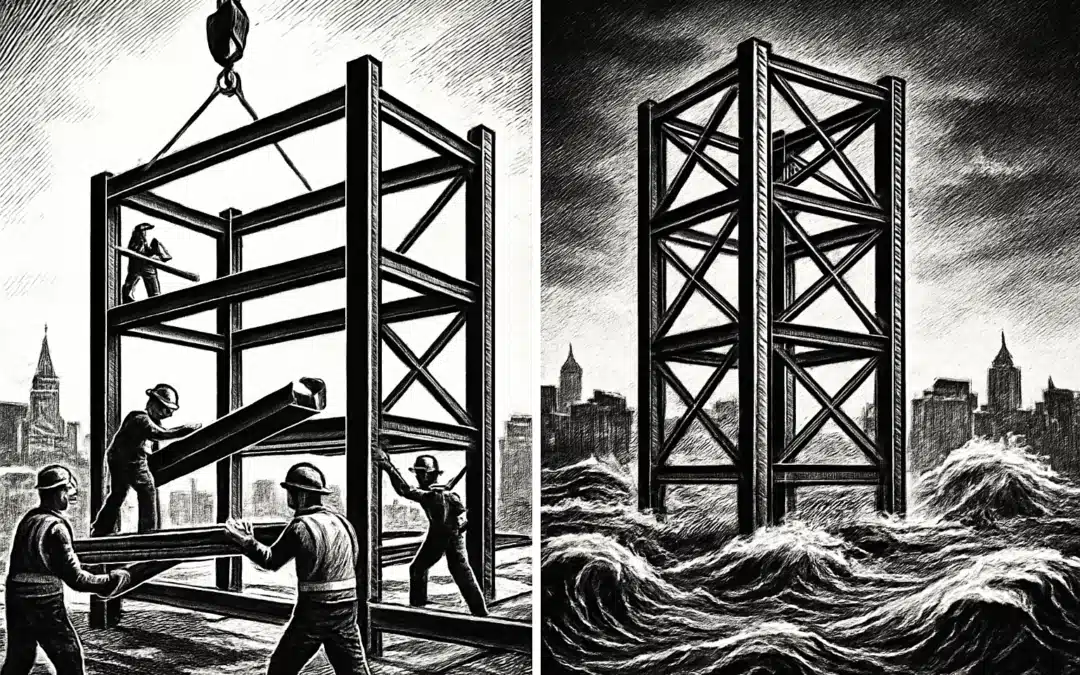
Like arranging domino pieces in a chain reaction of productivity, pre-engineered steel components can be quickly and accurately assembled, substantially compressing the construction timeline. For example, picture the compact workshop kit, a marvel of Ontario engineering that exhibits the efficiency of steel structures.
Is Steel the Metallic Green Knight of Sustainable Construction Practices?
In the quest for sustainable construction solutions, steel shines forth as an unsung hero. With its recyclability and energy efficiency, it embodies the blueprint for green construction practices. It is the proverbial phoenix, able to rise anew from its old, discarded forms without losing any of its structural integrity.
A case in point is how Ontario’s steel buildings consistently showcase eco-friendly construction. From reduced energy consumption to minimal on-site waste, it’s clear that steel structures are the epitome of sustainability.
How does the Future of the Canadian Construction Industry Look with Steel Leading the Charge?
The use of steel building kits has surged in popularity in recent times. These kits signify the democratization of construction, empowering even small-scale developers to benefit from the advantages of steel.
Unraveling the future, we see an era where steel establishes itself distinctly—at the foundation of resilient, adaptable, and sustainable urban landscapes across cities like Ottawa. All of this, while ensuring that the spark and vibrancy of community events, public holidays, and sport races are not dimmed due to construction constraints.
Pro Tip for Developers: Investing in steel construction is an investment in control—control over costs, timelines, and environmental impact. Embrace this powerful tool to herald a new era of efficient and sustainable development.
We invite you to share your insights and experiences in the comments section: How are you adapting your building strategies this year?
Source: Read original article here and steel buildings